

Episode 19: Payroll in Switzerland
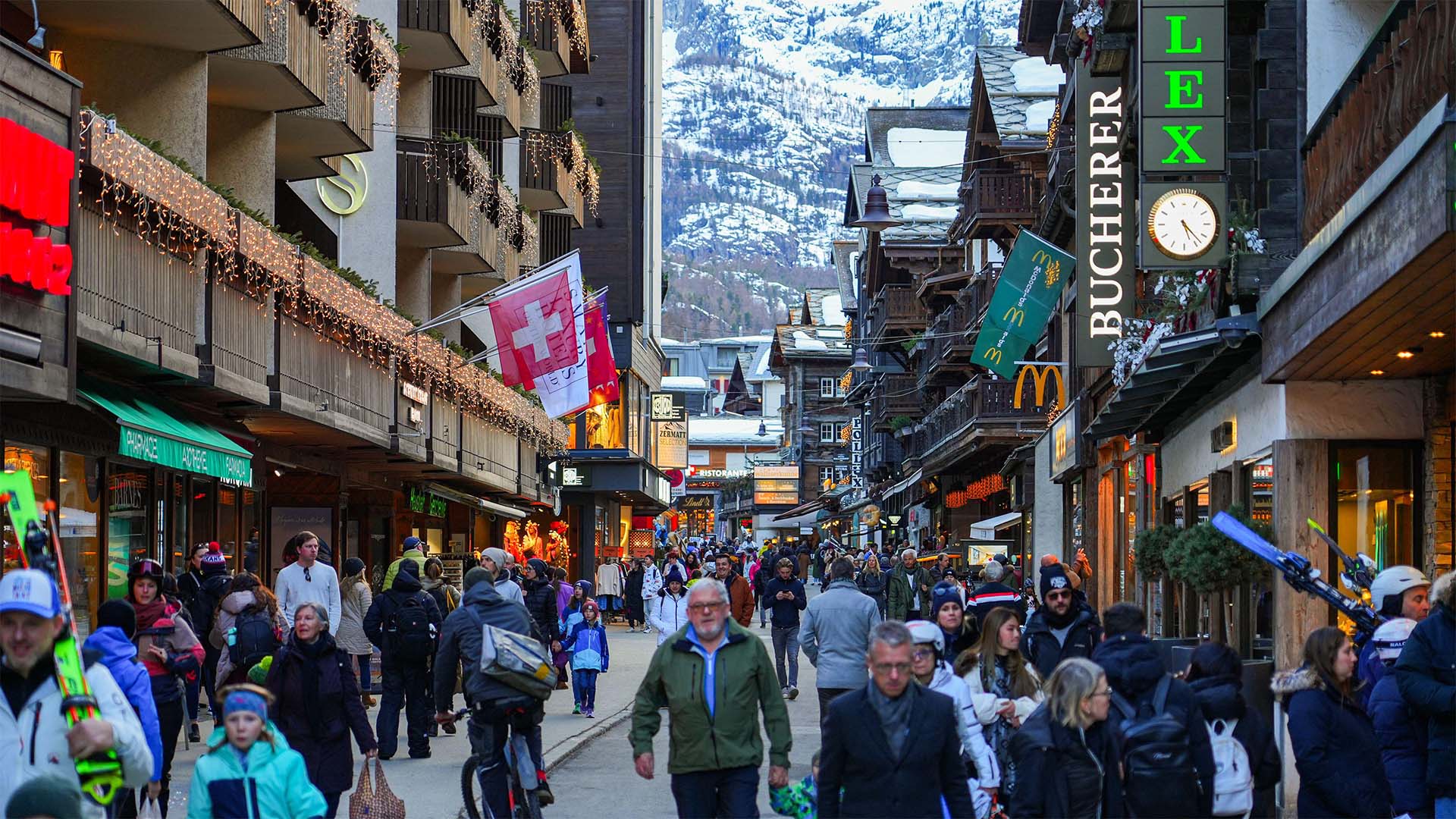
Switzerland sits at the heart of Europe and serves as a hub for multinational businesses that value the country’s central location and highly skilled workforce. Yet behind its strong foundation lies a decentralized payroll environment, defined by 26 autonomous cantons, multiple languages, and intricate cross-border tax agreements.
Listen to the episode
Timestamps
- Intro [00:07]
- Switzerland’s appeal as a business destination [03:55]
- Movement of employees across borders [05:57]
- The complexity of the cantons [07:27]
- Banu’s story [14:20]
- Bilateral agreements between Switzerland and its neighbours [17:58]
- Remote working across borders [18:57]
- The three pillars of Switzerland’s pension system [20:29]
- Managing reporting requirements via Swissdec [22:09]
- Timesheets in Switzerland [24:52]
Payroll in Switzerland
Switzerland: The land of fine chocolates, imposing mountains, and a financial system that keeps much of the world ticking. However, the European country contains much more complexity than its idyllic scenery would suggest. A patchwork of regulations and compliance issues can catch multinational employers off guard if they’re not familiar with local rules.
While Switzerland is centrally located in Europe, it’s not part of the European Union. That independence strongly shapes its employment laws, social security system, and payroll rules. The country’s 26 cantons — basically states or provinces — have significant autonomy and independent taxation and labor laws. Switzerland also has four official languages: German, French, Italian, and Romansh, and employers are expected to be able to navigate interactions in various languages, especially as these change across cantons. This means employment conditions, payslips, and HR documentation can vary significantly.
Employers must carefully determine where an employee lives and works in order to apply the correct rules. Even a simple address change can affect tax treatment. While some elements of social security are governed at federal level, others vary regionally, requiring employers to remain flexible and precise in their payroll operations.
Cross-border employees add another layer of complexity. In cities like Geneva and Basel, thousands of workers commute daily from neighboring France, Germany, and even Italy. At the same time, many Swiss citizens choose to live across the border due to the high cost of housing, while continuing to work in Switzerland. Bilateral tax agreements prevent double taxation, but they require careful payroll handling. Remote work arrangements must also be monitored closely, as exceeding permitted thresholds can shift tax obligations between countries.
“In Switzerland you have a lot of cross-border [employees] coming from Germany, Italy, and France. In Geneva, for example, it’s 140,000 people crossing the border every day.“
Dimitri Guilbaud, Director of ADP Switzerland
Then there’s Switzerland’s social security system, which is split into three pillars that combine mandatory state and occupational pensions with voluntary private savings. For employers, accurate calculation and reporting of the first and second pillars are central to payroll compliance.
In this episode of Payroll Around the World, we’re joined by ADP experts Maryline Duret, Business Development Manager at ADP Switzerland, and Dimitri Guilbaud, Director of ADP Switzerland, as they share their insights on navigating Switzerland’s payroll system. From managing payroll across various jurisdictions to submitting accurate documentation via Swissdec, Switzerland’s main digital administrative platform, this episode showcases ADP’s deep local expertise and experience.
transcript
Click to read the episode transcript
Luisa Rollenhagen (00:07): Hello, and welcome to another episode of Payroll Around the World! I’m your host, Luisa Rollenhagen.
Payroll Around the World is your all-inclusive guide to understanding how payroll operates across different countries. Each episode spotlights a specific country and features interviews with ADP experts on the ground, as well as locals who share their perspectives on work and pay in their homeland.
After all, payroll can’t truly be global if it isn’t local as well.
Today, we’re heading to Switzerland. Most listeners will immediately associate the European country with chocolate, extraordinarily beautiful mountains, banks, and precise clockwork. But behind Switzerland’s picturesque Alpine landscape lies a patchwork of regulations and compliance issues that can catch multinational employers off guard.
While Switzerland sits at the heart of Europe, it’s crucially not part of the European Union. That independence strongly shapes its employment laws, social security system, and payroll rules.
Dimitri Guilbaud (01:19):
We are also part of Europe physically, but not integrated in the European community.
Luisa Rollenhagen (01:28):
Switzerland is split up into 26 cantons — basically states or provinces — and has four official languages: German, French, Italian, and Romansh. This means that employment conditions, payslips, and HR documentation often vary by region.
Maryline Duret (01:47):
Each of the 26 cantons has a degree of autonomy leading to variation in local labour laws and regulations and also business practices. So for example, each has its own tax rates and tax regulations. So the calculation is not the same for all the cantons, the deductions are different.
Luisa Rollenhagen (02:10): As if that weren’t complicated enough, employers also need to contend with the large number of cross-border workers that move back and forth between Switzerland and its neighbouring countries, particularly France and Italy.
However, it’s not just international citizens coming to work in Switzerland every day. Switzerland’s most populous cities, including Zürich and Geneva, have famously high costs of living. As such, many Swiss citizens have actually made the move across the border to more wallet-friendly pastures while continuing to work in Switzerland.
Banu (02:46):
I’m an artist, I need a studio in my house. In Geneva, it would’ve been impossible to find such a house to rent or buy with my salary.
That’s why I chose to change countries.
Luisa Rollenhagen (02:56): That was Banu, a Swiss citizen who moved to France several years ago while continuing to commute to Geneva for work. We’ll hear more of her story in a little bit.
And those other two voices you just heard? That was Dimitri and Maryline, our ADP experts for this episode. They’re going to walk us through the ins and outs of payroll in Switzerland today, and I’m thrilled to welcome them to today’s episode.
Hello Dimitri and Maryline! Would you like to introduce yourselves?
Dimitri Guilbaud (03:25):
I’m Dimitri Guilbaud. I’m the director of ADP Switzerland. I’ve been in ADP for 24 years, and ADP has been in Switzerland since 1974. That’s over 50 years of experience.
Maryline Duret (03:39):
My name is Maryline Duret. I’m the business development manager at ADP Switzerland and joined ADP in ’98.
Luisa Rollenhagen (03:48): Thank you for joining us today.
I’d like to kick things off by talking about Switzerland’s appeal as a business location.
Maryline Duret (03:55):
Switzerland has a very highly developed and diverse economy with very strong sectors such as the financial services, of course, pharmaceuticals. And also high quality manufacturing sectors, especially all the machinery and the precision instruments. So the economy is really reliant on high value goods exports with key trading partners, including of course the EU.
Dimitri Guilbaud (04:24):
To understand the Swiss economy, you must understand the country first because Switzerland is a country with 26 cantons and each canton is like an autonomous part of Switzerland. So there’s a management with the federal, but all the cantons can decide from all the rulings they want.
There’s also four national languages, German, French, Italian, and Romansh. And so a lot of English too.
And so it adds some complexity in Switzerland because you have a German part, an Italian part, and a French part. So for the economy we can say that Zurich is the economic capital of Switzerland, even if the capital is Bern.
Maryline Duret (05:13):
We have a strong labor market with low unemployment rates and highly skilled and multilingual workforce like Dimitri explained because we need to work in various languages and also we have a very strong education system.
Dimitri Guilbaud (05:29):
We are also part of Europe physically, but not integrated in the European community. So we are really independent from that. We have a different currency. We have the Swiss Franc and not the Euro.
Luisa Rollenhagen (05:44): Of course, that’s a really important point that multinationals shouldn’t forget.
But even though Switzerland isn’t part of the EU, there is a lot of movement across the borders with its neighbours, right?
Dimitri Guilbaud (05:57):
In Switzerland you have a lot of cross-border coming from Germany, Italy, and France. It represents just for Geneva for example, it’s 140,000 people crossing the border every day. So it’s huge. And the most of this cross border are French after you have Italian and the last is German.
Maryline Duret (06:18):
You close the border, if we can’t come every day to work, of course there will be an issue with the economy, especially in the Geneva area.
Luisa Rollenhagen (06:27): These cross-border workers seem to be a significant part of Switzerland’s labor market. Switzerland isn’t part of the European Union, so it doesn’t follow the same regulatory framework. But it is part of the Schengen Area, which makes it much easier for people to move across borders.
So with all that in mind, how are these kinds of work arrangements actually handled by payroll?
Maryline Duret (06:51):
We need to deal with bilateral agreements between the countries to avoid that cross borders will be taxed twice in this country and also in Switzerland, and social security. So it’s quite complex to manage those profiles in the payroll because you have very various situations and you really need to comply with all the Swiss rulings and also the rulings from the home country. So this makes payroll complex in Switzerland.
Luisa Rollenhagen (07:22): I can imagine. What other aspects of Swiss payroll add complexity?
Dimitri Guilbaud (07:27):
In Switzerland the complexity is more with the declaratives and all those cantons applying different rulings. And the fact that you have several languages too. This is very complex for people to manage a company in Switzerland. And really the payroll itself is not very difficult, but all the declarative linked to this is more complex. Also, in Switzerland we have a really global approach. So that means there’s a lot of HQs from companies.
Maryline Duret (07:59):
We have various social and tax status and we must handle the international tax treaties and social agreements in the payroll. Yes, with expatriates, shadow payroll, et cetera, where our clients, they also need to have tax advisors to help them. You need really to determine the right status to be applied for each person in order to comply with all the legal rulings. And also the language is more complex compared to France because in France you just process the payroll in French, where here, we have in the company, you might have an entity in Zurich with German speakers, another one in Geneva with French speakers, et cetera. So you need to produce, for example, all the documents, the pay slips, the salary certificates in various languages. You need also to be able to discuss with the authorities in various languages because the tax authorities in Zurich, you will speak with them in German, where in Geneva it’ll be again in French or sometimes in Italian, et cetera. So the language makes it more difficult to do the payroll.
Luisa Rollenhagen (09:08): So navigating different languages across cantons is definitely something that multinationals may need to contend with. What else do employers need to know about Switzerland’s cantons?
Maryline Duret (09:19):
Each of the 26 cantons has a degree of autonomy leading to variation in local labour laws and regulations and also business practices. So for example, each canton has its own tax rates and tax regulations. So the calculation is not the same for all the cantons, the deductions are different. And also we might have some variations also in the social security contributions, contributions across the canton. So we must be very flexible about the regional differences. So this is what makes it difficult because we have different layers because you need to be compliant with some federal rulings. For example, the basic first pillar for the social security is federal, but then you might have some differences for other social deductions based on the canton. The social, again, the tax, the family allowances for example, are different. So you need to be very careful and to know exactly where you should tax your employee.
There is a kind of competition between the cantons just to attract, let’s say the big fortunes and also the companies. So they need to have attractive tax rates and especially to say look, you can have also some headquarters where you will have find the top management because the tax of course is lower for the company and for the employees themselves.
Luisa Rollenhagen (10:45): So different cantons will compete to attract certain types of business?
Maryline Duret (10:50):
I had some experience in the past where some companies willing to create a new entity in Switzerland, they were not familiar with Switzerland. And the first question that they asked me was, where should we live to have the lower tax rates? And they asked us to make some simulations just to be sure that they would live in the right canton to make, to minimize their tax.
Luisa Rollenhagen (11:12): I see.
And how common is it for people to work in one canton and live in another?
Dimitri Guilbaud (11:19):
There’s a lot of people doing that because for example, we, ADP, are in Geneva and we have some people from Vaud canton or from France cross border.
Working from a canton to another one, it’s very common. And the tax is with this, if you are Swiss, you are going to pay the tax where you live. If you are cross border, you’re going to pay the tax where you work. So this is a big difference between the canton to canton or cross border for the tax. It’s really this big difference. And so if you live in canton Vaud, you’re going to pay the tax in canton Vaud even if you work in Geneva.
Maryline Duret (12:01):
If you compare for example to France where, for example, you have a self-service portal for the employee, they can change their address. There is no impact for the payroll.
But in Switzerland you need to be very careful because if the employee can change the address in the system, then there will be an impact on the tax. You need to be very careful on the working and the living because depending on the cases, the tax rate and the rulings will be different.
Luisa Rollenhagen (12:32):
I want to go back to the issue of cross-border employees again. From what I understand, it’s not only foreign citizens who cross the border from neighbouring countries to work in Switzerland, correct?
Maryline Duret (12:44):
Cross Borders are not only non-Swiss citizens and we have a lot of Swiss citizens, due to the cost of living in Switzerland, they just live in France and they also have a specific status then as a Swiss citizen living outside. And also your tax rulings will also depend on your partner and where your partner is working, if your partner is working in the same canton or in another canton. Because you can have, for example, a Swiss citizen living in France, married with a French partner, and one is working in Geneva and the second in Lausanne in the canton of Vaud, so you have various situations.
Because of course it’s cheaper. You can buy a flat or a house in France easily. But in Switzerland it’s very, very expensive. And the cost of living is very high compared to France. Also in Geneva, we don’t have a lot of place now to build new houses, et cetera. The geographical area, it’s limited.
Luisa Rollenhagen (13:48): That point is really significant.
In this podcast, we don’t just speak to local experts, we also talk to local people on the ground and find out what their experience is like from an employee perspective.
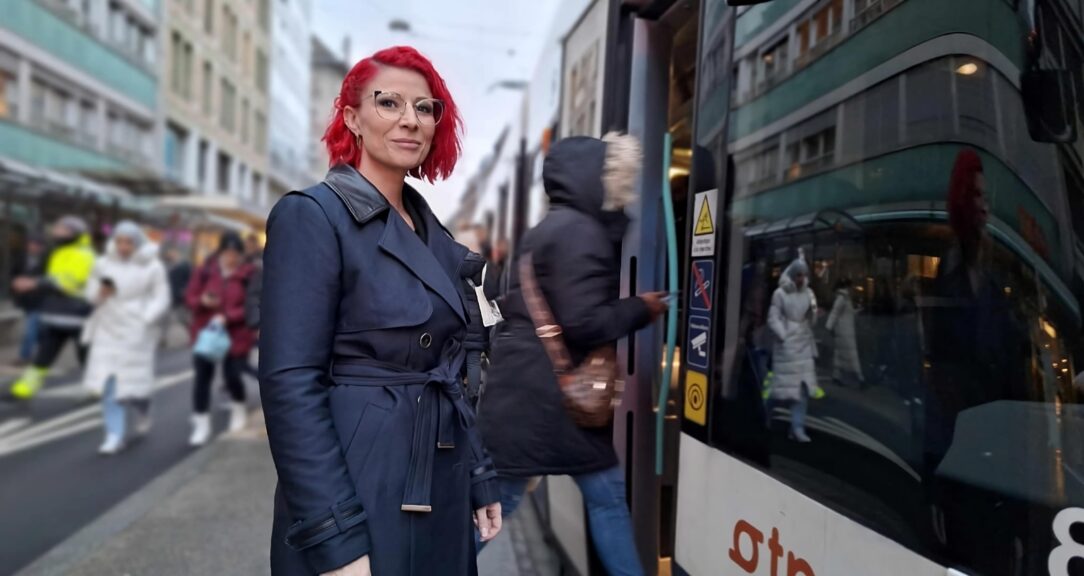
Therefore, I’d like to introduce Banu, who you just heard a little preview from earlier in the episode. Banu is a Turkish-born Swiss citizen who works as a doctor in Geneva. Four years ago, she made the move across the border to France.
Banu (14:20): I’m of Turkish origin, and I immigrated to Switzerland 23 years ago. I work as a doctor and I’m also an artist. My professional activity has always continued in Geneva.
Four years ago, I moved to France. I’ve been a cross-border worker for four years.
I became Swiss ten years ago, and thanks to this, I have the right to live in France. It opened doors for me.
Luisa Rollenhagen (14:42): Despite having moved to France, she’s still close enough to Geneva to enjoy all the city has to offer.
Banu (14:49):
I’m currently so close, about 400 meters to the Swiss border and the village of Hermance.
I still have very good access to Geneva life, and I use Geneva’s public transport.
Luisa Rollenhagen (14:59): Before she moved to France, Banu lived in Switzerland, in the municipality of Onex. But when it became clear that she’d be getting more mileage for her money on the other side of the border, she made the decision to move.
Banu (15:13):
I bought a house in Onex. I lived there for ten years. After my divorce, I was forced to sell the house.
I didn’t have opportunities to find something similar in Geneva, so I chose to move to the French side to get the same quality of life and the same type of house.
I’m an artist, I need a studio in my house. In Geneva, it would’ve been impossible to find such a house to rent or buy with my salary.
That’s why I chose to change countries.
Luisa Rollenhagen (15:39): Banu says she’s happy with the move.
Banu (15:41):
It made my life easier because I am very close to my job, I don’t get stuck in traffic jams in the city.
I’m happy to be here. My quality of life has also improved.
Luisa Rollenhagen (15:50): However, she did realise that dealing with French bureaucracy was not exactly easy to navigate. Her residency status means she needs to file a French tax return.
Banu: (16:03)
I had huge difficulties with paperwork, with the administrative work on the French side.
I can say that the French system is so difficult.
Luisa Rollenhagen (16:11): But because she’s employed by a Swiss hospital in Geneva and is a Swiss citizen, her income is taxed in Switzerland and then reconciled in France.
Banu (16:20):
Thanks to my status, there is a withholding tax, So I didn’t experience any major problems, but I have no idea how it works for someone who is self-employed, and how they have to file their taxes, whether they have to do it both on the Swiss and French side.
There are some things I pay for a little more, but when I calculated overall, I am at an advantage on the French side. I took into account the rent, electricity bills, heating, and many other things and I found that I can live here with my salary, but I have no possibility of living with the same conditions in Switzerland. It wouldn’t have been possible to have the same quality of life with my salary.
Luisa Rollenhagen (16:58): Banu told us that she knows many other Swiss citizens who have chosen a similar arrangement.
Banu (17:05):
I know a lot of people who do that. For example, my neighbour is the same. Around us, in our neighborhood, generally speaking, everyone is in the same situation.
My neighbours on both sides are like me, they are doctors, they work in Geneva.
Luisa Rollenhagen (17:19): One thing that stays in Switzerland? Social security.
Banu (17:23):
I have kept my Swiss insurance since I got here. I live in France but I use the Swiss health system. It’s more secure, more accessible. On the French side, it’s not that easy finding a doctor.
Luisa Rollenhagen (17:39): I was curious to learn more about how this type of working arrangements affects payroll, so I went back to Maryline and Dimitri.
We just heard from Banu, who moves between France and Switzerland. What do employers need to know about these kinds of employment situations and how does it affect payroll?
Maryline Duret (17:58):
There is a bilateral agreement between France and Switzerland. So you might be taxed in Switzerland as it’s taxed at source, it’s calculated in the payroll. Then in France you do a declaration.
They just deduct from your tax what you already paid in Switzerland and Switzerland pays a certain amount of this tax, we say withdraw or send back some money to France. So it’s a bilateral agreement, but you are not taxed twice.
Luisa Rollenhagen (18:27): Do these kinds of bilateral agreements exist with other neighbouring countries?
Maryline Duret (18:32):
Yes. So with Germany, with Italy, so it’s mainly bilateral agreements between neighboring countries. Because as Dimitri mentioned, Switzerland is not part of EU.
And this is also for the home office for example, we have various agreements. So the rulings for Germany are not the same as for France when you work in Switzerland.
Luisa Rollenhagen (18:57): That was just going to be my next question. How do remote working arrangements play a role here?
Dimitri Guilbaud (19:03):
There’s some rulings more for cross border, because when you are cross border for France for example, you must are limited to do 40% of the time at home office and not more, including all the trip you can do abroad the country. So you have 10 days abroad the country including in this 40% of home office. So if you go over this, you have to pay tax in France.
Luisa Rollenhagen (19:30): So you mean business trips are part of this 40%?
Dimitri Guilbaud (19:34):
Each time you are abroad, meaning not working in Switzerland, it’s time abroad. So you have 10 days limited. 10 days, after this 10 days you pay also some tax. And for example for German, it’s different. For France it’s 40%. For German it’s 49.9%.
Luisa Rollenhagen (19:55): Wow, that’s very specific. I’d love to know how they measure that.
I want to change course a bit and go back to something you said earlier, Maryline. You mentioned something about the “first pillar” of the Swiss social security system when we were talking about social security on a federal level.
As far as I understand, Switzerland’s pension and social security system is built on three complementary pillars, designed to combine state security, employer contributions, and individual choice. Can you elaborate on that?
Maryline Duret (20:29):
So the first pillar, in French, we say AVS or AHV in German, this is the minimum pension that a retiree will get, but enough for living in Switzerland.
It’s mandatory contributions for employees and employers just to pay the pensions.
And then there is a second layer, a second pillar. This is the occupational pension plan. It’s mandatory, and both employee and employer pay this contribution to do some savings for the retirement. So this is included in the payroll first pillar and second pillar, we have some payroll rulings to calculate the contributions.
So it’s the same for all the companies in Switzerland, where for the second pillar, the company will choose a pension fund. And then as an employee of course it’s mandatory to be involved in this pension plan. And each time you change employer, you will change the pension fund, and of course there are various ways to calculate this in the payroll, and it’s also something that might be complex if we want to calculate automatically in the payroll system.
And the third pillar, it’s a private savings. It’s completely outside payroll. It’s also a kind of pension plan, but you just take it in a bank or insurance company.
Luisa Rollenhagen (21:55): I see. So for employers, it’s really the first and the second pillar that they’ll need to contribute to.
What else do employers need to know about running payroll in Switzerland? For example, what’s a typical payroll run like?
Dimitri Guilbaud (22:09):
In Switzerland, most of the companies pay their employee the 25th of the month. So they start retro from this date and we calculate the first, what we call cutoff date. It’s the first step where you upload all the data for the months. Generally it’s around the 10th of the month. So you upload all your data at this cutoff date after you do the first run of payroll, so the first calculation after that, you check your payroll and if needed you do a second run to arrive through the payment date and to provide the payment file.
In Switzerland, we have XML norm, we have a norm for this bank file and you provide all the report and the GL files for the accounting when you have finalized your payroll. And just after you do all the declaratives, so there’s a Swiss norm called Swissdec, Swissdec file where you send by teletransmission all the declaratives for the company. And so it’s something where it’s concentrated all the institutions who are part of this norm. And after we redistribute to all the institution the contribution for this Swissdec declaratives, and after the declarative, it’s the end of the payroll cycle.
Luisa Rollenhagen (23:37): Got it, so employers submit all social security and tax declarations through Swissdec, which is a central platform that distributes the data to every required institution, officially closing the payroll cycle.
Maryline Duret (23:51):
Most of the companies, they just process one, all the population at the same time, so one cycle per month. But we have some clients that have, for example, monthly paid and hourly paid employees and they just process separately. So we might have more than one cycle per month just to segregate the population that will have various payment dates.
So in December, some companies pay the 13th salary in advance before the normal date. We have a service, especially for the banks, they are paying bonuses outside the normal payroll processing, so they have an additional off cycle to pay either the bonus and or the 13th salary at a different date.
Luisa Rollenhagen (24:38): Is it common in Switzerland to pay a 13th month?
Maryline Duret (24:41):
It used to be, let’s say, but it’s less and less common and more and more companies now are paying on 12 months. Of course it’s easier to manage.
Luisa Rollenhagen (24:52): So as I understand it, timesheets are a particularly important thing in Switzerland. Can you explain that a bit more?
Dimitri Guilbaud (24:59):
Yes, for sure. In Switzerland you have a norm managed by SECO…
Luisa Rollenhagen (25:04): I’m just interrupting quickly to explain that SECO stands for the State Secretariat for Economic Affairs. It’s Switzerland’s federal authority for economic and labor-market policy.
Please continue.
Dimitri Guilbaud (25:18):
It’s an obligation to have a time sheet and to do this every month. There’s an exception for the executive who can build a convention where there are no, they’re not obliged to do the time sheet, but this time sheet is mandatory for all the other employees and at the end you have overtime or less time than you made. But when you have overtime, generally the company used to do compensation and not to pay. Some of them want to pay a part and to compensate the rest, but most of the company use compensation. That means free time for the people. And I think the employee like this to compensate their overtime, but they like to be paid too. But sometime it’s a mix. But yes, there’s an obligation for that in every company.
Maryline Duret (26:06):
It’s quite an opportunity for companies like ADP because, as the companies must comply with these legal rules on working hours, rest periods over time, et cetera, of course they need to have some time recording systems and the SECO encourages the adoption of digital time recording tools. So time tracking systems are more and more integrated with the payroll systems.
Dimitri Guilbaud (26:34):
We have one T and A platform, means time and attendance platform, and is compliant with SECO ruling. And the advantage for ADP is that it’s an integrated one. It means it’s integrated with the payroll, so no need to have some interface between the two platforms. So really it’s a very good platform where the client can comply with all the Swissdec and SECO rulings
Luisa Rollenhagen (27:03): I see! It sounds like ADP Switzerland runs payroll like a perfectly tuned Swiss clock.
We’re nearing the end of the episode, but before I let you go, I’d like to ask you my favourite question. What do you love most about working in payroll in Switzerland?
Dimitri Guilbaud (27:19):
For me, it’s the diversity. I think we have a really diverse sort of client, languages, different situations, different companies.
Maryline Duret (27:30):
I would say it is mainly the international environment with let’s say, yes, the cultural exposure. Because as Dimitri mentioned, we have a lot of people from very, very various countries. So we need of course to adapt to all these cultures. So we must have a lot of flexibility to, we need to be able to communicate in various languages with people coming from various cultures.
Luisa Rollenhagen (27:57): That’s a lovely note to end on.
Maryline and Dimitri, thank you so much for joining us today! It’s been a pleasure to learn about Switzerland’s cantons and how their individual regulations affect payroll. I also found it really interesting to learn more about the way cross-border workers add new levels of complexity.
I hope you got a bit more insight into the intricacies of payroll and the labor landscape in Switzerland today. If this episode has piqued your interest or your company is considering expanding into Switzerland, please visit ch.adp.com to learn more.
And don’t forget to subscribe to learn more about payroll around the world with each new episode.
You’ve been listening to
ADP Payroll around the World
Produced by ADP and Storythings
episode Credits
- Executive Producers for ADP: Nicola Smith and Kate Allen
- Executive Producer for Storythings: Matt Locke
- Lead Producer for Storythings: Chris Mitchell
- Scripted and hosted by: Luisa Rollenhagen
- Guest interview recorded by: Aylin Elci
- Voiceover for guest interview: Eleni Stefanou
- Project Manager: Aimee Perrinjaquet